
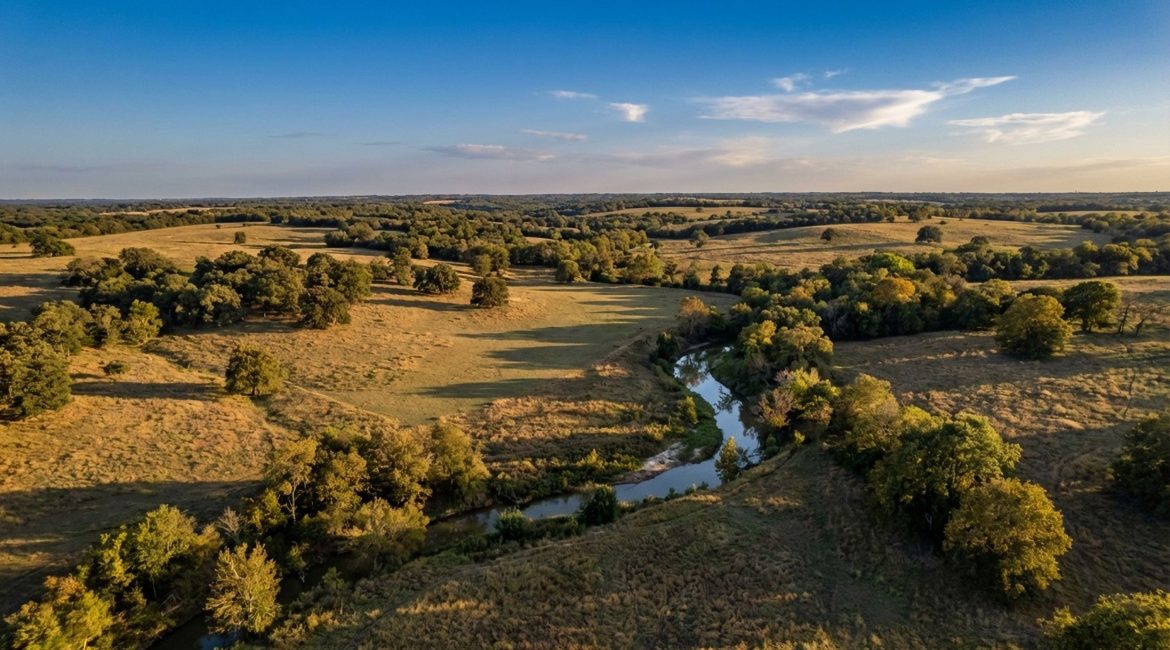
All recreational land has a story.
Some duck holes have been hunted by the same family for decades. Sometimes a deer tract tucked away in the Mississippi Delta quietly changes hands without ever making a listing website. Maybe it’s a ranch in West Texas that’s been watched for years and has finally come on the market.
The reasons people buy them are just as varied.
Some are looking for a place to hunt. Others want a weekend retreat. For many, it’s the chance to own a piece of land they’ve imagined having for a long time.
The property itself is what gets everyone’s attention first. It’s the conversations that follow are usually about something else.
As an offer starts to come together, the discussion naturally shifts toward access, ownership, water, improvements and long-term plans. Financing becomes part of that conversation, too.
After working through recreational land transactions across Texas, Mississippi and the broader South, we’ve seen a few subjects come up often enough that they’re worth sharing.
Access Rarely Gets the Spotlight. It Usually Deserves More Of It.
Nobody tours a hunting property hoping to spend the afternoon talking about easements.
Most people are looking at the creek, the food plots, or the stand locations. That’s exactly what you’d expect.
Then someone asks how you actually get there. That’s usually when the conversation changes.
Is there recorded access?
Does the road cross another property?
Who maintains it?
What happens after a heavy rain?
Most of the time, those questions have answers. The important part is making sure everyone is working from the same understanding before sitting at the closing table. It’s not unusual for buyers, attorneys, title companies, and lenders to all be looking at the same issue from a different angle.
All of a sudden, the property hasn’t changed. Your understanding of it has.
“In my personal and professional experience, access is one of those things that seems simple until it isn’t,” advises Matt Manuel, VP relationship manager for Conterra Ag Capital.
“I have seen buyers fall in love with a property only to realize later than understanding an easement, a shared road, or having seasonal access deserved a lot more attention. And those conversations are much easier to have prior to going under contract than they are a week before closing.”
Recreational Land Often Ends Up Being More Than a Hunting Property
A surprising number of recreational properties refuse to fit neatly into one category.
A buyer may start looking for a hunting property and end up owning something that also produces grazing income, generates timber revenue, or becomes part of a family’s long-term estate plan.
It’s rare when someone sets out saying, “I’m looking for a property that does four different things.”
Yet that’s often what happens in the end.
The buyers who seem happiest years later are usually the ones who recognized that early on. They bought the hunting property they wanted, but they also understood they were buying a piece of land that could serve their family in several different ways.
That perspective has a way of influencing everything that follows, from future improvements to ownership decisions and even financing.
“The best recreational properties rarely serve just one purpose. Going in, they may be viewed as just a place to hunt, but over time they often become focused on as income-producing assets, conservation projects, and as something you want to leave to the next generation,” continues Manuel.
“I find that buyers who can recognize the full potential of what purposes the property can serve, tend to make better long-term decisions for it.”
Before Long, Every Conversation Seems To Include Water
You can tour a property on a perfect afternoon and leave thinking you’ve seen everything you need to see.
Then someone asks what it looks like after six inches of rain.
That’s a different conversation.
Across much of the South, water influences access, drainage, infrastructure and how a property functions throughout the year. A flooded timber tract outside Hebert, Louisiana raises different questions than a ranch in West Texas, but the principle is the same.
Understanding how water behaves is really another way of understanding the property itself.
Perfect certainty isn’t the goal. Fewer surprises after closing is.
The Improvements That Matter Most Aren’t Always The Ones Buyers Notice First
Everyone notices the cabin. The shop. The lodge overlooking the lake.
Those are easy to picture yourself enjoying.
The things buyers sometimes overlook are the roads that stay passable after a storm, the bridge that’s already in place, the utilities that make future improvements possible, or the water infrastructure quietly doing its job.
Those aren’t always the features that sell a property, but they often become the features owners appreciate the most.
Buying Recreational Land Starts With Better Conversation
It’s easy to spend months looking for the right property.
However, it’s less common to spend the same amount of time thinking about ownership structure, succession plans, or how the purchase fits into long-term financial goals.
Those conversations rarely feel urgent until suddenly they are.
Some buyers are purchasing their first hunting property. Others already own several tracts of land. Experience doesn’t seem to be the deciding factor. The transactions that tend to move with the fewest surprises usually begin with a few important conversations before the purchase becomes urgent.
That includes conversations with attorneys, accountants, and lenders.
Not because anyone expects problems, but because those conversations often answer questions buyers haven’t thought to ask yet.
“ One of the biggest advantages a buyer can have is understanding the economics before purchasing a property. Recreational properties tend to move fairly quickly, and having a lender involved early in the process provides time to think through your ownership structure, liquidity, and long-term goals instead of trying to solve everything in a 45-day contract window.”
– Matt Manuel
VP Relationship Manager, Conterra Ag Capital
One Question Worth Asking
Before you make an offer, picture yourself walking that same property ten years from now.
What do you hope you’ll see?
The answer probably isn’t measured in acres.
It might be grandchildren learning to hunt. Timber that’s reached maturity. A cabin that’s become the gathering place everyone looks forward to visiting. It could simply be knowing the property is still in the family.
There’s no right answer: the value of the question is that it shifts your thinking from buying land to owning it.
Final Thoughts
Most people remember the first hunt or the first weekend with family.
They don’t remember the day they wired the funds. The transaction is simply how ownership begins.
Taking the time to identify access, water, infrastructure, ownership goals, and financing won’t make a property perfect. But it will help you understand everything more completely before you make the investment.
Buying recreational land is about more than closing a business deal. It’s about fully understanding a property you’ll enjoy for years to come.
Conterra provides financing for recreational and hunting properties across the United States. If you’d like to talk through financing options before making an offer, reach out to Matt Manuel or the Relationship Manager serving your area.
Conterra Ag Capital is a private lender, focused exclusively on American agriculture. We offer a variety of specialized ag loans designed to meet the specific needs of farmers and ranchers nationwide. With a team of experience relationship managers strategically located across the country, we provide regional expertise and personalized service to our clients. Whether you’re a seasoned producer or new to the industry, Conterra is committed to supporting your agricultural endeavors. Our people, products, and process-driven approach to lending makes us unique.
Disclaimer: Please note that the information provided in this article is for educational and informational purposes only, and should not be construed as financial or investment advice. While we have made every effort to ensure the accuracy and reliability of the information presented, Conterra Ag Capital and its affiliates make no representation or warranty as to the completeness, correctness, timeliness, suitability, or validity of any information contained in this article. You should always consult a qualified financial advisor, tax professional, or other qualified professional for advice on your specific financial situation.

